Diaper Review    Healthy Baby

Healthy Baby diaper review.
The first EWG Verified diaper.

Healthy Baby diapers · Healthy Baby diaper review · HealthyBaby diapers

Healthy Baby was the first disposable diaper ever to earn EWG Verified status and the first to earn MyMicrobiome Certification. It is made in a carbon-neutral facility in the Czech Republic, prints its full ingredient list on the packaging, and avoids the 3,900-plus chemicals banned by the Environmental Working Group. It is also one of the most expensive disposable diapers on the US market. This is why we think the price is earned.

Updated April 2026  ·  Our Diaper and Our Pull-Up Style  ·  Ingredients verified from official brand disclosure

♥ Our pick  ·  Healthy Baby Our Diaper
EWG Verified (first diaper) MyMicrobiome Certified (first diaper) Totally Chlorine Free Full ingredient disclosure Plant-based materials No fragrance, no lotion, no dyes European manufactured B Corp certified
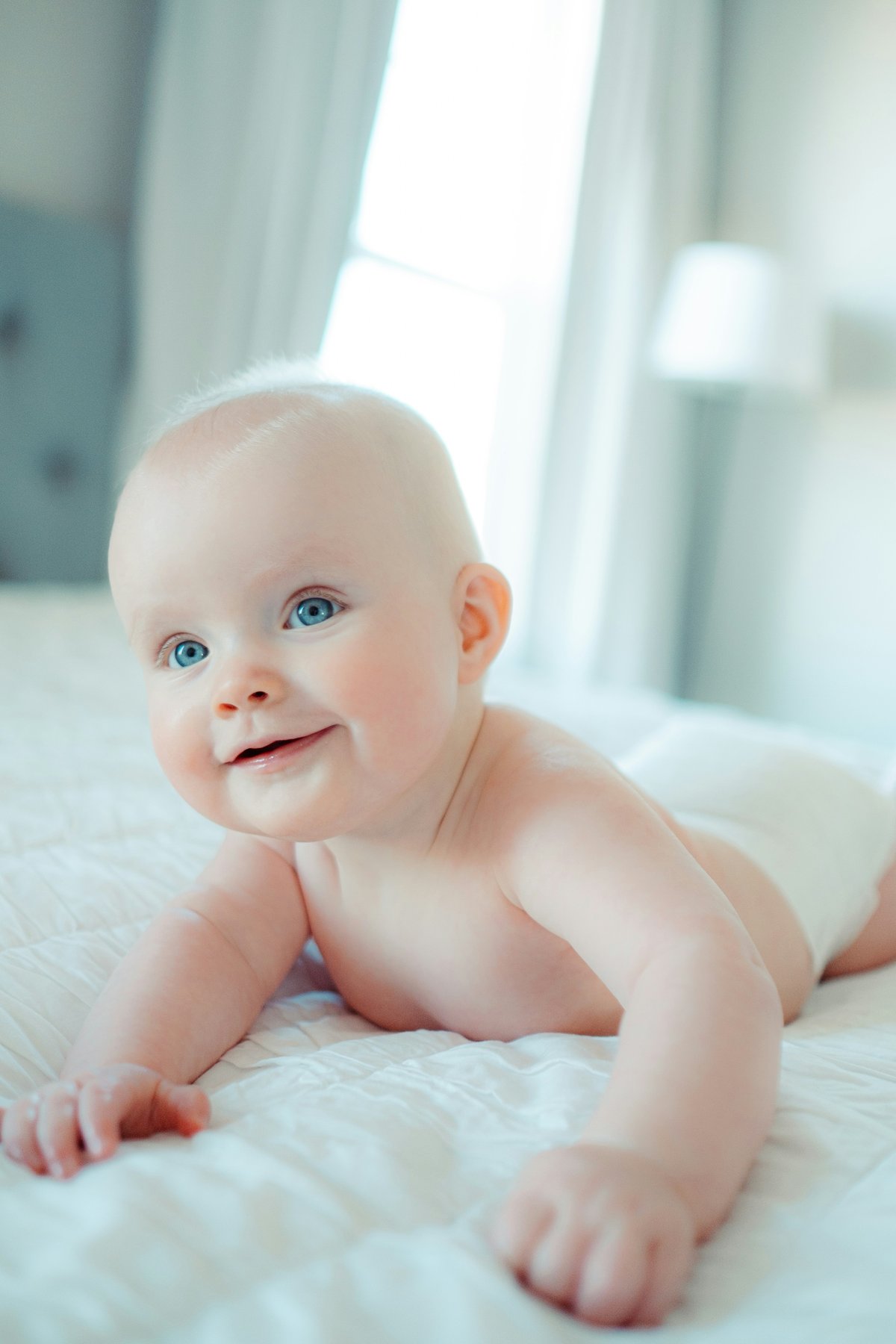
Smiling baby on white bedding in a bright, soft-lit nursery

Photo: Wesley Tingey / Unsplash

Quick answer
Is Healthy Baby a good diaper?
  • Yes, it is our top pick for clean disposable diapers and the only diaper to hold both EWG Verified and MyMicrobiome Certification. Totally chlorine-free bleaching, full ingredient disclosure on the packaging, plant-based polyethylene components, 15% organic cotton outer cover, no fragrance, no lotion, no dyes, no phthalates.
  • First EWG Verified diaper in the world: Tested against 3,900 plus chemicals of concern. Requires full ingredient disclosure, PFAS testing, VOC testing, heavy metals and pesticide residue testing. No other disposable diaper on the US market holds this certification.
  • First MyMicrobiome Certified diaper in the world: Awarded November 2025 by an independent German scientific organisation. Verifies that the parts of the diaper touching skin do not chemically disrupt a healthy skin microbiome.
  • Manufactured in the Czech Republic: Carbon-neutral facility running on renewable energy. Produced under the EU's REACH regulatory framework, which is meaningfully stricter than any US rule that applies to diapers.
  • Full ingredient disclosure on the packaging: Listed layer by layer, including adhesive composition. Almost unique in the disposable category.
  • No chemical wetness indicator: A deliberate design choice to avoid the dye or pH indicator chemicals used in conventional diapers to create the colour-change strip.
  • Premium pricing: Approximately $0.53 per diaper at standard non-subscription pricing, and lower when you subscribe. Roughly double conventional brands and comparable to Coterie at the premium end of the market. Available via subscription on healthybaby.com and in-store at Target nationwide.
The brand

Built by the founder of Happy Family.
Made in the Czech Republic.

Healthy Baby was founded in 2020 by Shazi Visram and Joe Shamah. Visram's previous company was Happy Family Organics, the largest organic baby food brand in the United States, which she built and sold before launching Healthy Baby. The brand is now carried at Target nationwide in addition to its direct-to-consumer subscription, and is a Certified B Corporation.

The diapers are manufactured in the Czech Republic at a carbon-neutral facility powered by renewable energy. This is a deliberate choice. European diaper manufacturing operates under the EU's REACH framework, which governs chemical sourcing, testing, and disclosure more strictly than any US regulation that applies to diapers. In the United States, diapers fall under the Consumer Product Safety Commission, which does not require ingredient disclosure or test for the chemical categories that EWG Verified screens against.

Healthy Baby was also the first disposable diaper to earn EWG Verified status when it launched, and as of April 2026, it is still the only one. That is the through-line that explains the product. Every design choice, from TCF bleaching to the absence of a wetness indicator, is traceable to the EWG chemicals-of-concern list.

What is in the diaper

The ingredient list, layer by layer.

Most diaper brands publish what is not in their product. Healthy Baby publishes what is in it, layer by layer, down to the adhesive composition. This is genuinely rare. Of all the disposable diapers we have reviewed, the full material disclosure is matched by no one else in the US market. Here is the complete composition for Our Diaper.

Layer Composition
Topsheet (touches skin) 50% plant-based polyethylene, 50% polypropylene
Absorbent core 60% sodium polyacrylate (SAP), 40% wood pulp (100% FSC certified, totally chlorine-free)
Core wrap 100% polypropylene
Acquisition layer 100% polypropylene
Leg cuffs 35% plant-based polyethylene, 35% polypropylene, 20% adhesive, 10% elastic polyurethane
Closing system 55% polypropylene, 25% adhesive, 20% polyethylene
Backsheet 45% plant-based polyethylene, 45% calcium carbonate, 10% adhesive
Outer cover 45% polyethylene, 40% polyester, 15% organic cotton
Printed inks (<0.5%) Pigments made without lead or heavy metals

What this tells you

Totally Chlorine Free core

The wood pulp is TCF, not ECF. This is the non-negotiable starting point for absorbent core safety and eliminates the dioxin byproducts that elemental-chlorine bleaching produces. Many conventional diapers still use ECF processing.

Plant-based polyethylene

The topsheet, leg cuffs, backsheet, and outer cover all incorporate polyethylene derived from sugarcane rather than petroleum. Chemically identical to petroleum polyethylene, but significantly lower carbon footprint in production.

15% organic cotton outer cover

Healthy Baby is the only disposable diaper we have reviewed that incorporates organic cotton in the outer cover. Uncommon in the category and costlier to source than synthetic alternatives.

Full adhesive composition disclosed

The adhesive breakdown is listed publicly: styrene-isoprene and styrene-butadiene block copolymers, naphthenic processing oil, pentaerythritol tetrakis stabiliser. Industry-standard adhesives, but no other diaper brand publishes this detail.

Still a disposable diaper

The absorbent core is sodium polyacrylate, the same SAP that every disposable uses. Plant-based polyethylene is still polyethylene. This is the cleanest disposable we have seen. It is not cleaner than cloth.

No wetness indicator

Wetness indicators use dye or pH indicator chemicals, typically quaternary ammonium and halogenated organic compounds. Healthy Baby removed the indicator to avoid the chemistry. Some parents prefer having one.

Why ingredient disclosure matters

Diapers are not required to disclose ingredients in the US. The Consumer Product Safety Commission, which regulates them, does not mandate material labelling or test for the chemical categories that are routinely found in conventional diapers. A 2019 study by ANSES, the French food, environmental, and occupational health safety agency, tested 23 diaper brands and identified more than 200 concerning chemicals. A 2024 peer-reviewed review in Science of the Total Environment went further, systematically reviewing the evidence on dioxins, phthalates, VOCs, PAHs, bisphenols, heavy metals, and PFAS in disposable diapers, and finding that PFOA cancer risk exceeded recommended thresholds. The brands that publish their material composition voluntarily are doing so without legal obligation. Healthy Baby was the first disposable diaper brand to do this fully.

Reading the certifications

What the certifications actually mean.

Healthy Baby stacks certifications heavily. Some of them earn the premium on the box. Others look stronger in marketing than they are in substance. Here is what each one actually signals.

EWG Verified: the real one

The Environmental Working Group's verification is the strongest US-market consumer safety certification in babycare. It requires full ingredient disclosure, screens against over 3,900 chemicals of concern, and requires third-party testing for PFAS, VOCs, heavy metals, and pesticide residues. Healthy Baby is the first and, as of April 2026, still the only disposable diaper to hold EWG Verified status. That is a real first, not a marketing one. You can view Healthy Baby's full Skin Deep listing on the EWG site, with the reviewed ingredient breakdown.

MyMicrobiome Certified: a genuine first with fine print

In November 2025, Healthy Baby became the first diaper to earn MyMicrobiome Certification. MyMicrobiome is a real, independent German scientific organisation that tests products for their impact on skin microbiome balance. The certification verifies that the parts of the diaper touching skin, specifically the topsheet, leg cuffs, and back blowout protector, do not chemically disrupt a healthy skin microbiome.

The testing was conducted in-vitro, on isolated microbiome cultures in a laboratory. Not in-vivo, on actual babies wearing actual diapers over actual hours. The brand is transparent about this. What the certification demonstrates is that the materials themselves do not disrupt microbiome balance when wet. What it does not demonstrate is what happens in a warm, occlusive diaper worn for eight hours. That is a harder question and no testing methodology currently answers it fully. Every other diaper brand making microbiome claims is doing so with no third-party verification at all, so Healthy Baby is still meaningfully ahead of the category.

EDANA Stewardship: less impressive than it sounds

Healthy Baby lists adherence to the EDANA Stewardship Programme on its site. This needs context. EDANA is the European Nonwovens Industry Association, and the Stewardship Programme is a voluntary self-regulatory scheme launched in 2020. Its signatories include Kimberly-Clark, Procter & Gamble, Johnson & Johnson, and Essity. Together, signatories produce over 80% of diapers sold in Europe. In other words, EDANA adherence is the mainstream European diaper industry's shared baseline. Pampers Europe adheres to it. Coterie uses identical language on its own website. Healthy Baby's adherence signals European manufacturing compliance, which is meaningful, but it is not a premium clean-diaper credential.

The supporting stack

Beyond EWG and MyMicrobiome, the brand holds OEKO-TEX Made in Green, which is stricter than standard OEKO-TEX, the Nordic Swan Ecolabel, FSC for the wood pulp, and Plastic Neutral status via offsetting through rePurpose Global. The B Corp certification applies to business practices rather than product safety. Taken together, the stack is meaningfully stronger than any other US-market disposable. Coterie, the closest competitor, holds OEKO-TEX Standard 100 and publishes its own safety report but is not EWG Verified and not MyMicrobiome Certified.

Performance in the real world

What unsponsored parents actually report.

The Healthy Baby sponsored reviewer ecosystem is sizeable. We specifically looked for unsponsored parent feedback and aggregated common themes across multiple sources.

Softness and skin tolerance

Consistent across every review we read. The diapers are genuinely soft, fragrance-free as claimed, and almost no one reports contact irritation or rash. For babies with eczema or reactive skin, this matches what the ingredient list predicts. The ingredient profile simply does not contain the fragrances, dyes, and lotions that trigger most diaper-contact skin reactions.

From the brand's review page

My child is allergic to 4 of the top 9 allergens. For the first year of his life I noticed he always scratched at his lower back. I just attributed it to his allergies and eczema. No. It was a change in diaper composition and increased chlorine. One week after switching to Healthy Baby and the scratching stopped and his skin cleared.

Verified customer review, healthybaby.com

One parent's experience is not proof of how any individual baby will respond. Skin reactions depend on the specific allergens, the severity of existing eczema, and many variables unrelated to the diaper itself. But the pattern we see across unsponsored reviews for babies with allergies, eczema, or sensitive skin is consistently positive. If conventional diapers have been a source of irritation for your baby, the ingredient profile gives Healthy Baby a reasonable chance of making a difference.

Absorbency and overnight

Mostly positive. Multiple parents report the diapers hold up through overnight stretches without sizing up. The brand claims 12-hour leak protection, which broadly matches reported experience. The absorbent core uses a dual-layer design with FlashDry technology and air channels distributing moisture, which appears to work as described for most users.

Leaks

This is where the picture gets more nuanced. Multiple unsponsored reviews reported more leaks than their previous brand, particularly when baby was sitting or had looser stools. Healthy Baby launched a redesigned diaper model in summer 2025 with an updated blowout shield, and post-redesign reviewers have reported fewer up-the-back incidents.

There is also a pattern worth noting in long-term user reviews. Parents who have used the diapers across multiple sizes frequently report that leaks correlated with fit rather than product performance. One longtime customer puts it simply.

From the brand's review page

We've been using these for three years. They only ever leaked when we were ready to size up. That's how we knew to try the bigger size.

Verified customer review, healthybaby.com

This is a meaningful distinction. Leaks that signal a size change are different from leaks that indicate a product problem. Given how wide Healthy Baby's size ranges are (more on fit below), this pattern is plausible. If you are experiencing leaks, the first thing to try is sizing up before concluding the diaper itself is the issue.

Fit

Two things worth knowing. Healthy Baby updated its weight ranges on February 25, 2026 after completing an internal size study, and printed packaging on retail shelves may not yet reflect this. The weight overlap between sizes is also unusually wide. A 14-pound baby could theoretically fit Size 1, Size 2, or Size 3. This tends to mean fit is less precise than brands with tighter size boundaries, and multiple reviewers recommend sizing up if your baby is between sizes.

Heads up

If you are buying Healthy Baby from Target or Amazon, the printed weight range on the pack may reflect the older 2025 guidelines. Check the online size guide on healthybaby.com for the current weight ranges rather than relying on the packaging.
The pricing reality

Premium price, justified on ingredients alone.

Healthy Baby is priced at the top of the clean-diaper market. Here is the per-pack and per-diaper breakdown by size.

Size Weight range Diapers per pack Changes per day
N (newborn) Under 10 lbs 32 diapers 6 to 7
1 7 to 14 lbs 33 diapers 7
2 10 to 16 lbs 31 diapers 6 to 7
3 14 to 22 lbs 28 diapers 5 to 6
4 18 to 28 lbs 25 diapers 5 to 6
5 24 to 32 lbs 22 diapers 4 to 5
6 28 to 40 lbs 18 diapers 3 to 4

Standard non-subscription price is $105 for 198 diapers, which works out to approximately $0.53 per diaper. The subscription brings that down further, and Healthy Baby also runs periodic sales that can drop the per-diaper cost closer to $0.50. Always check healthybaby.com for the current price before budgeting.

For comparison, Pampers Swaddlers run about $0.25 per diaper. Honest Company is around $0.35. Coterie is approximately $0.48 per diaper at regular price and drops closer to $0.41 when on sale. Healthy Baby costs roughly double a conventional brand and is in the same premium tier as Coterie, though Coterie tends to be slightly cheaper at regular price and meaningfully cheaper during its frequent sales. In the newborn phase at 7 changes a day, Healthy Baby's total monthly spend lands between $105 and $115 depending on sale and subscription status.

The price reflects three things the brand pays for that most competitors do not. European manufacturing in a carbon-neutral facility. The ingredient sourcing required to pass EWG Verified testing. The third-party certification overhead itself. The premium is not marketing padding. Whether it is worth paying depends on how heavily you weight ingredient safety against cost.

Head to head

Healthy Baby vs Coterie.
Healthy Baby vs Kudos.

Two comparisons parents researching Healthy Baby most frequently make.

Healthy Baby vs Coterie
Premium vs premium. Almost the same price.
  • Healthy Baby holds EWG Verified and MyMicrobiome; Coterie does not
  • Healthy Baby publishes full layer-by-layer ingredient disclosure on packaging
  • Coterie is slightly cheaper at regular price (~$0.48 per diaper) and meaningfully cheaper on sale (~$0.41 per diaper)
  • Coterie has tighter size bands, which some parents prefer for fit precision
  • Coterie publishes its own Diaper Safety Report tested against 200+ chemicals
  • Both are TCF, fragrance-free, dye-free, and phthalate-free

If ingredient disclosure and certification depth are your priority, Healthy Baby edges ahead. If price matters and you are willing to accept a smaller certification stack, Coterie is the better value within the premium tier, especially during sales.

Healthy Baby vs Kudos
Full ingredient vs cotton top-sheet.
  • Kudos uses a 100% cotton top-sheet against the skin; Healthy Baby uses plant-based polyethylene blend
  • Healthy Baby has EWG Verified and MyMicrobiome Certified; Kudos does not
  • Independent testing has found inconsistent PFAS results across Kudos sizes; Kudos disputes this
  • Both are TCF, fragrance-free, and dermatologist-tested

If a 100% cotton top-sheet is the single factor that matters to you, Kudos is the only disposable that offers it. For everything else, Healthy Baby has the stronger certification stack and cleaner public testing record.

The verdict

Healthy Baby Our Diaper
is our top pick for clean disposables.

Healthy Baby is the first and only disposable diaper to hold both EWG Verified and MyMicrobiome Certification. It publishes its full ingredient list layer by layer on the packaging. It is made in a European carbon-neutral facility under stricter chemical regulations than anything the US applies to diapers. The ingredient profile passes every chemical category our diaper safety framework tests for. No dioxins. No PFAS. No phthalates. No fragrance. No lotion. No dyes.

The honest nuances worth knowing. The brand charges a premium, roughly double conventional diapers, which lands between $105 and $115 per month in the newborn phase depending on subscription and sale status. Leak reports exist but long-term users consistently describe them as a signal to size up rather than a product failure, which is plausible given Healthy Baby's unusually wide size ranges. A 2025 redesign with an updated blowout shield appears to have improved performance further. And it is still a disposable diaper built around the same sodium polyacrylate core every other disposable uses, which matters only if you are comparing against cloth rather than against other disposables.

Choose Healthy Baby if

  • Ingredient safety is your top filter and price is secondary
  • Your baby has sensitive skin or eczema
  • You want the strongest certification signal on the US market
  • You value full ingredient disclosure printed on the packaging
  • European manufacturing standards matter to you
  • You want a diaper independently tested for microbiome impact

Consider alternatives if

  • You want a similar certification profile at a slightly lower price (Coterie)
  • You want a 100% cotton top-sheet against skin (Kudos)
  • You are open to cloth and want the cleanest option overall

Read our full diapers guide for the complete category overview and the framework we use to evaluate every disposable.

Ingredient lists are sourced from official brand disclosure and verified retailer pages as of April 2026 and may change. Always read the label on the product you receive. Healthy Baby updated its weight ranges in February 2026 and retail packaging may lag this change. Check the online size guide on healthybaby.com for current weight ranges. Scores reflect our editorial ingredient criteria only and are not a safety assessment. All diapers listed meet regulatory standards in their country of sale.